Water Tank Cleaning in Kenya: Ensuring Safe Water with OmiDrop Africa
Water is the essence of life, but its safety and quality depend heavily on proper storage. Across Kenya—from the bustling streets of Nairobi and Mombasa to the growing towns of Kisumu, Nakuru, and Eldoret—residents and businesses rely on water tanks to secure a continuous supply. However, without regular maintenance, these tanks can harbor bacteria, sediment, and algae, turning a vital resource into a health hazard. This is where professional water tank cleaning in Kenya becomes essential. OmiDrop Africa offers unmatched expertise to ensure your water remains safe, clean, and reliable.
The Hidden Dangers in Your Water Tank
Many homeowners and businesses assume that stored water is inherently safe. Unfortunately, this isn’t always the case. Over time, water tanks accumulate:
- Sediment: Dust, sand, and rust particles that settle at the bottom.
- Microorganisms: Bacteria such as E. coli or Legionella can multiply, especially in stagnant water.
- Algae and biofilm: Exposure to sunlight encourages algae growth, which can turn water green or murky.
According to Kenya Water Services Regulatory Board (WASREB), improper tank maintenance is one of the leading contributors to waterborne illnesses in Kenya. Symptoms can range from minor stomach upset to severe gastrointestinal infections, highlighting the importance of routine tank cleaning.
Why You Should Prioritize Water Tank Cleaning
Neglecting your tank isn’t just a health risk—it can also lead to:
- Reduced water quality and taste: Contaminants affect water clarity and make it unpleasant to use.
- Plumbing problems: Sediment buildup can clog pipes and pumps, leading to costly repairs.
- Shortened tank lifespan: Algae, rust, and bacteria can degrade tank material over time.
- Non-compliance with regulations: Businesses, especially in hospitality or healthcare, must maintain hygienic water storage.
How Often Should Water Tanks Be Cleaned?
The cleaning schedule depends on tank size, usage, and water source:
| Tank Type | Recommended Cleaning Frequency |
|---|---|
| Domestic | Every 6 months |
| Commercial | Every 3–6 months |
| Rainwater Harvesting | Every 3 months |
| Industrial | Annually with professional monitoring |
Tanks in urban areas like Nairobi and Mombasa often require more frequent cleaning due to higher dust, urban runoff, and frequent usage. Meanwhile, rainwater tanks in Kisumu or Nakuru may accumulate more debris and algae due to rainfall and sunlight exposure.
OmiDrop Africa’s Expert Water Tank Cleaning Process
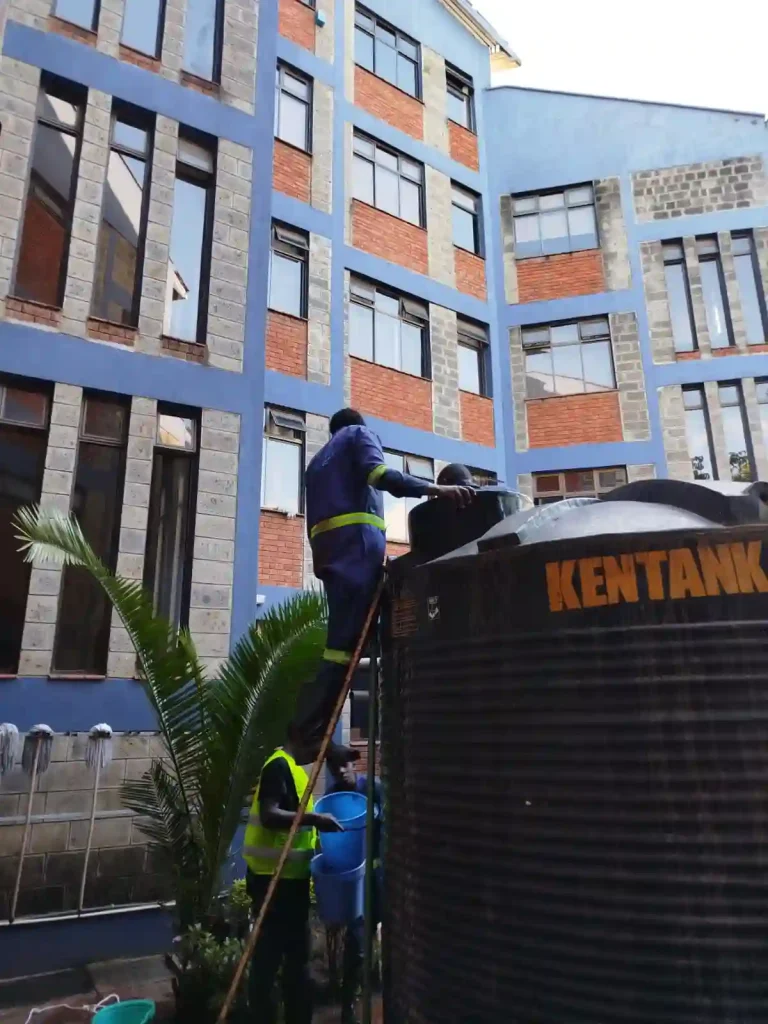
At OmiDrop Africa, our approach is both thorough and safe, ensuring the water you store remains clean and drinkable.
Step 1: Tank Inspection
We start with a full assessment to identify contamination levels, sediment buildup, and structural integrity. This allows our team to tailor the cleaning process specifically to your tank.
Step 2: Draining and Sediment Removal
Water is carefully drained, and sediments are removed using professional-grade pumps. This ensures that no debris remains at the bottom of the tank.
Step 3: Deep Cleaning
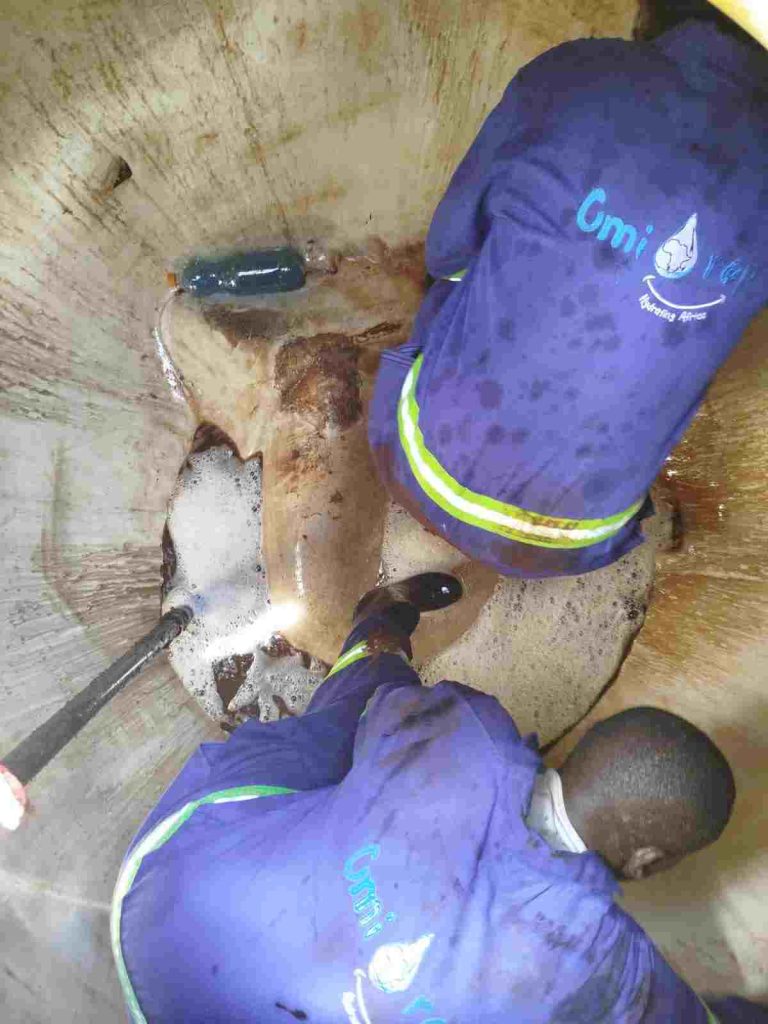
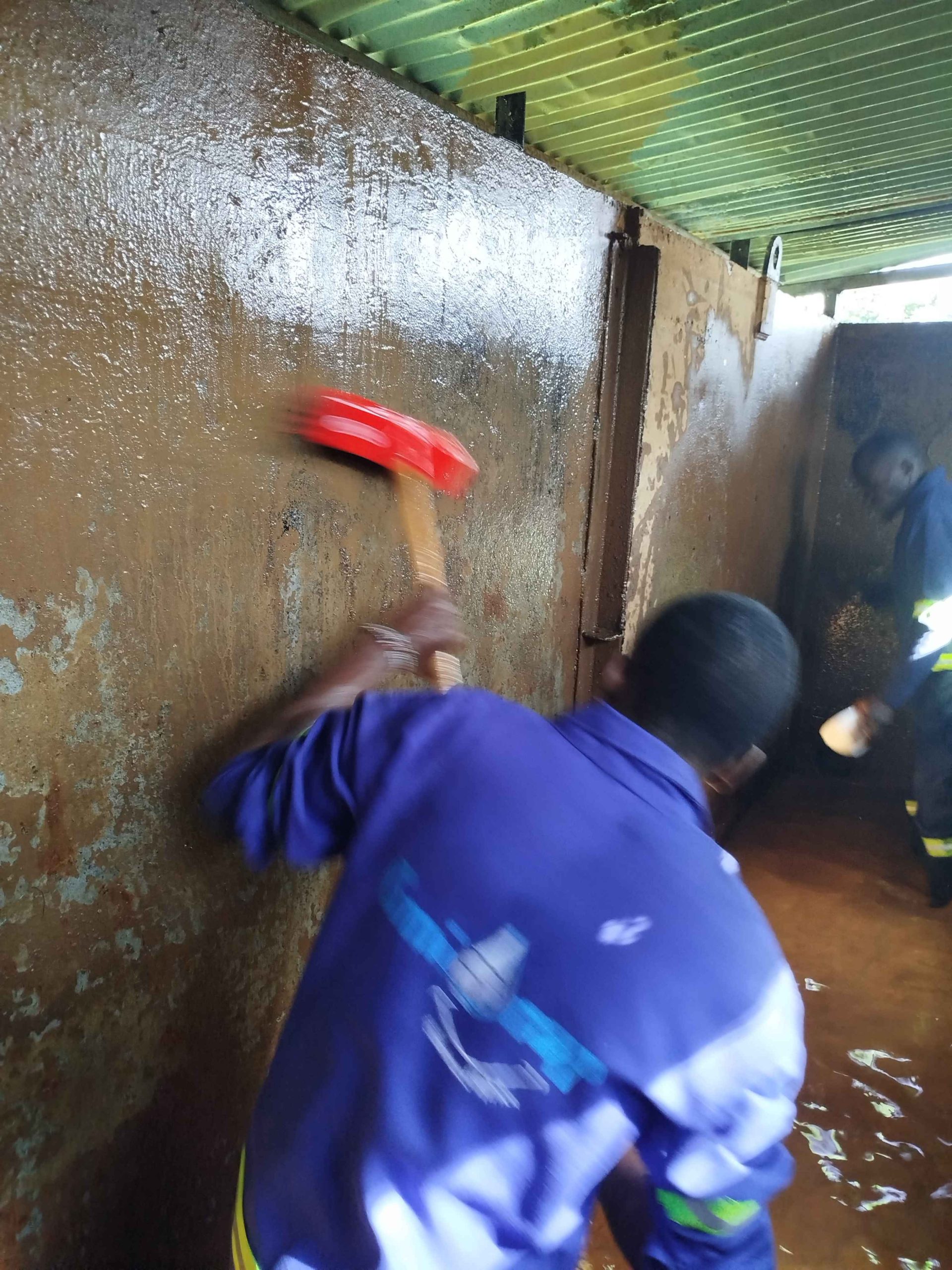
Our team scrubs the tank walls to remove algae, biofilm, and rust deposits. We use safe, eco-friendly disinfectants that eliminate harmful bacteria without compromising water safety.
Step 4: Quality Testing
Before refilling, water samples are tested to ensure safety and clarity. Only once the tank passes these tests is it refilled, giving you peace of mind that your water is safe to consume.
Common Water Tank Challenges Across Kenya
Nairobi and Mombasa
High population density and irregular water supply mean residents rely heavily on storage tanks. Dust, debris, and inconsistent water quality make regular cleaning critical.
Kisumu and Nakuru
Tanks often collect silt and algae due to rainfall and sunlight, affecting water taste and safety.
Eldoret and Smaller Towns
Hard water and rust accumulation can corrode metal tanks, reducing their lifespan and water quality.
By understanding these local challenges, OmiDrop Africa offers customized water tank cleaning solutions that address the unique needs of each region.
DIY vs Professional Cleaning: Why Expertise Matters
While some people attempt to clean tanks themselves, professional services provide significant advantages:
| Aspect | DIY | OmiDrop Africa |
|---|---|---|
| Safety | High risk of slips, chemical exposure | Fully trained team, safety gear provided |
| Thoroughness | Sediment often left behind | Complete removal of bacteria, algae, and deposits |
| Tools & Equipment | Brushes, buckets | High-pressure jets, vacuum pumps, and eco-friendly disinfectants |
| Time | Hours or days | Efficient cleaning with minimal disruption |
| Health Assurance | No testing | Water quality tested and verified |
Professional cleaning ensures not only a clean tank but also safe, potable water for your home or business.
Signs Your Water Tank Needs Cleaning
Some indicators that your tank requires immediate attention include:
- Cloudy or discolored water
- Foul or unusual odors
- Sluggish water flow or blockages
- Visible algae or sediment inside the tank
- Frequent plumbing issues
Ignoring these signs can lead to waterborne diseases and expensive repairs.
Additional Benefits of Regular Cleaning
- Health Protection: Reduces risk of diseases like cholera, typhoid, and diarrhea.
- Better Taste: Fresh water enhances cooking, beverages, and hygiene.
- Cost Efficiency: Prevents pump damage and pipe blockages, saving money long-term.
- Peace of Mind: Professional cleaning ensures compliance with hygiene standards, particularly for hotels, restaurants, and hospitals.
Customer Experiences
“OmiDrop Africa cleaned our water tanks in Nairobi, and we immediately noticed a difference in water clarity and taste. Their team was professional and efficient.” – Linda M., Nairobi
“In Kisumu, our rainwater tanks were full of algae. OmiDrop Africa’s cleaning services restored the water to crystal-clear quality. Highly recommend!” – John K., Kisumu
“As a restaurant owner, clean water is crucial. OmiDrop Africa not only cleaned our tanks but tested the water to ensure it met health standards.” – Grace W., Mombasa
Expert Tips for Maintaining Your Water Tank
While professional cleaning is essential, you can extend its benefits with proper maintenance:
- Cover tanks to prevent debris and insects from entering
- Avoid direct sunlight to reduce algae growth
- Regularly inspect and repair cracks or leaks
- Flush tanks monthly if possible, especially in high-use households
By combining regular inspections with professional cleaning, you ensure safe and reliable water year-round.
Why Choose OmiDrop Africa
OmiDrop Africa is more than just a service provider; we are partners in water safety. Our team is trained, certified, and equipped with the latest technology to provide:
- Nationwide coverage in Nairobi, Mombasa, Kisumu, Nakuru, Eldoret, and other towns
- Fast, safe, and eco-friendly cleaning techniques
- Water testing and verification for health assurance
- Affordable and transparent pricing
We understand the unique challenges of water storage in Kenya and offer bespoke solutions that protect your health and investment.
Conclusion
Water tank cleaning is a vital yet often overlooked part of maintaining safe water in Kenya. From urban hubs like Nairobi and Mombasa to growing towns such as Kisumu, Nakuru, and Eldoret, ensuring your water tank is free of bacteria, algae, and sediment is essential for health, efficiency, and peace of mind.
Don’t wait until water problems arise—schedule a professional water tank cleaning in Kenya with OmiDrop Africa today. Your family, employees, and customers deserve clean, safe, and reliable water.
Take Action Now: Contact OmiDrop Africa to book your water tank cleaning and ensure fresh water all year round!